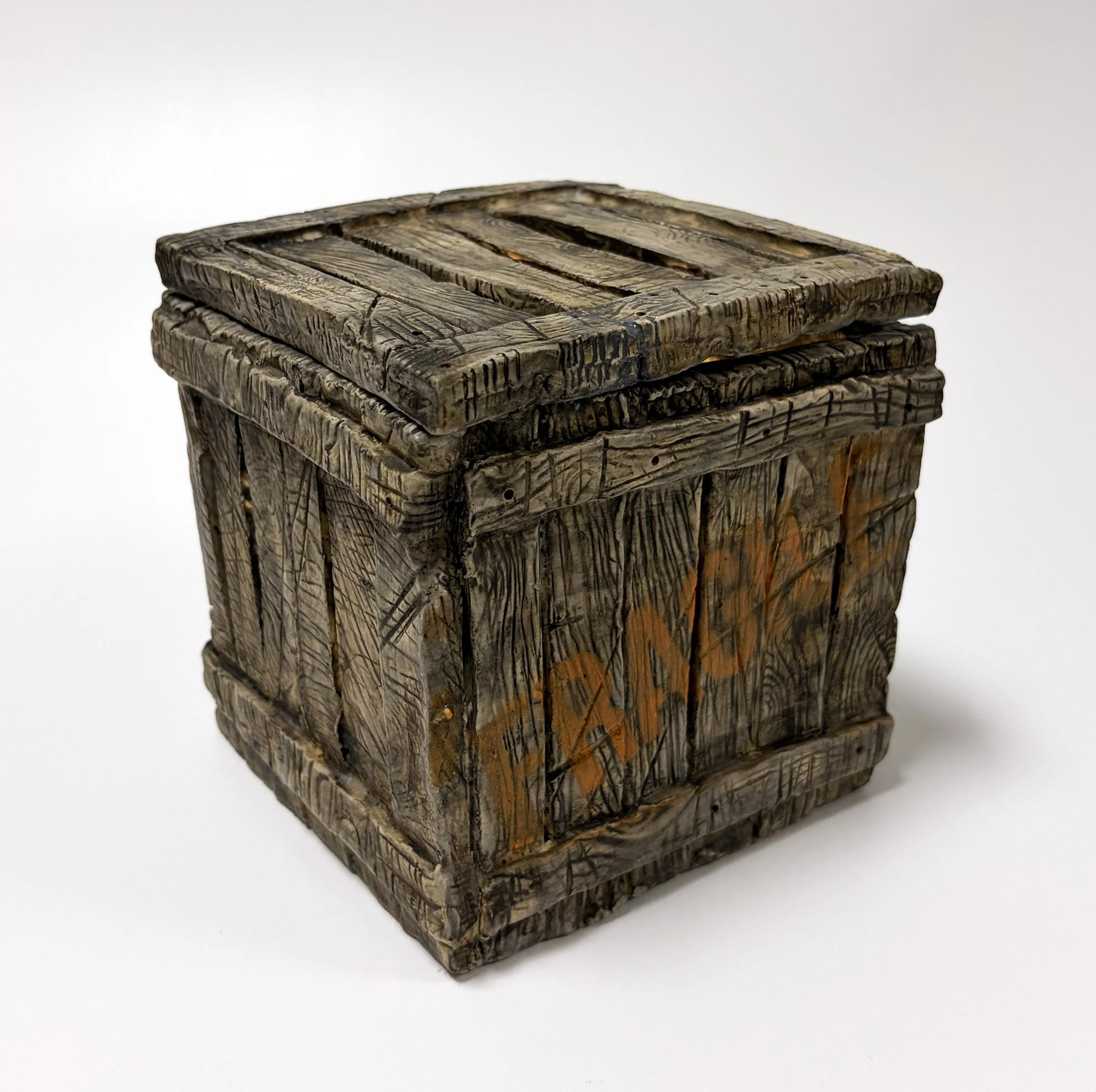
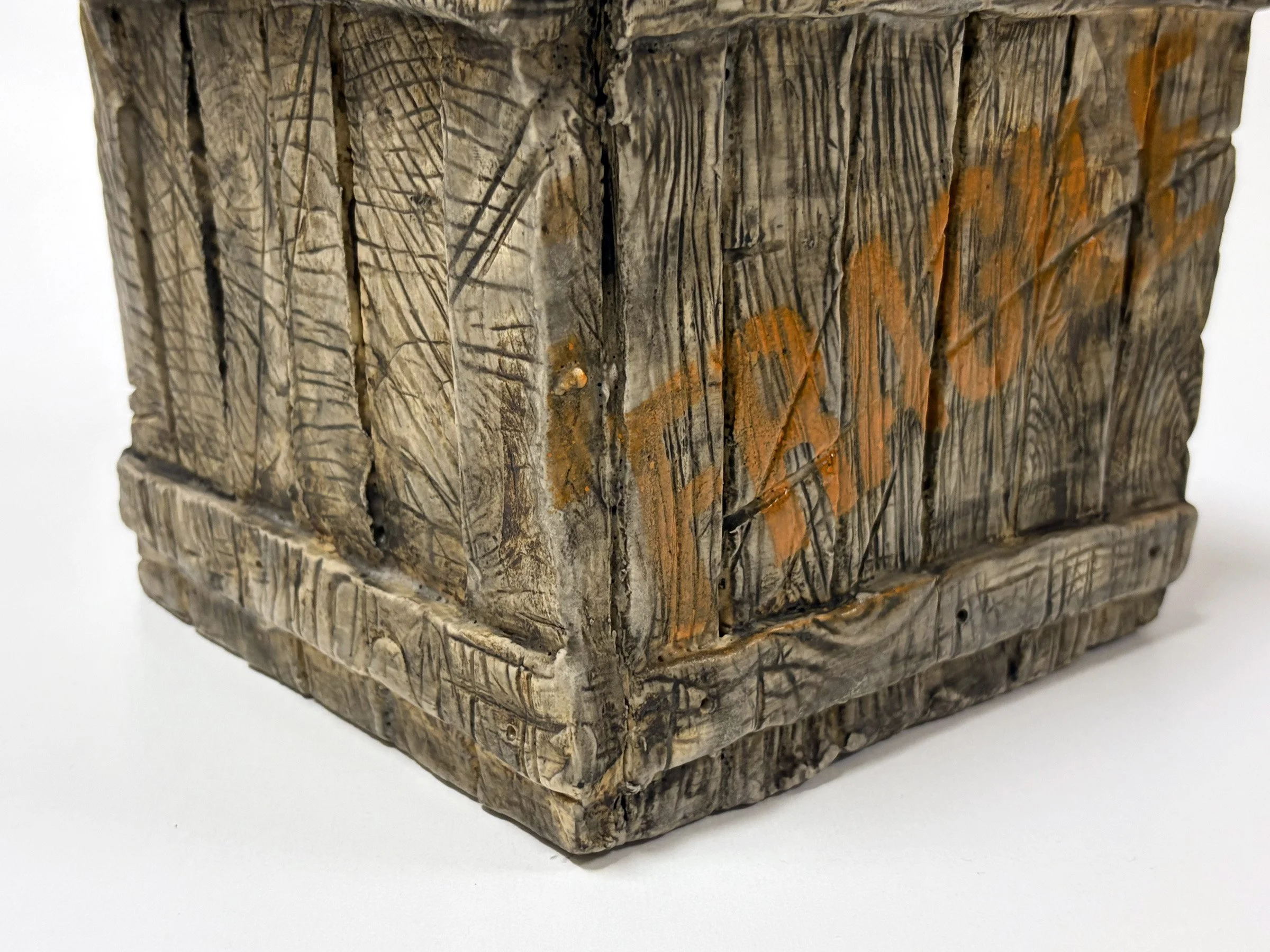
As Received takes the form of a weathered shipping crate, built with ceramic and marked by the accumulated evidence of use. Boards shift out of alignment. Edges are worn. Surfaces are scratched, stained, and repaired. It appears less like an object that was constructed than one that has already been somewhere.
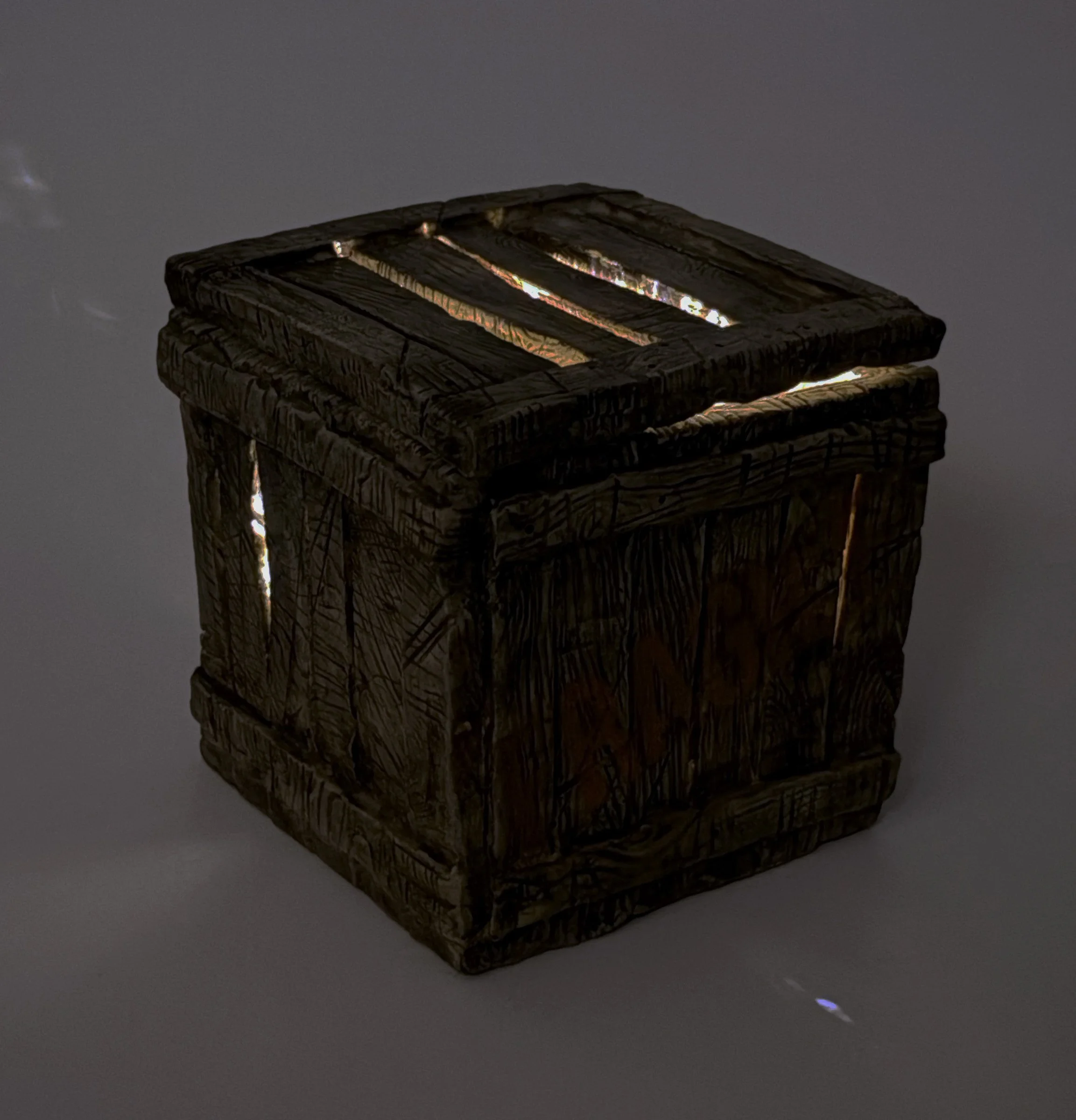
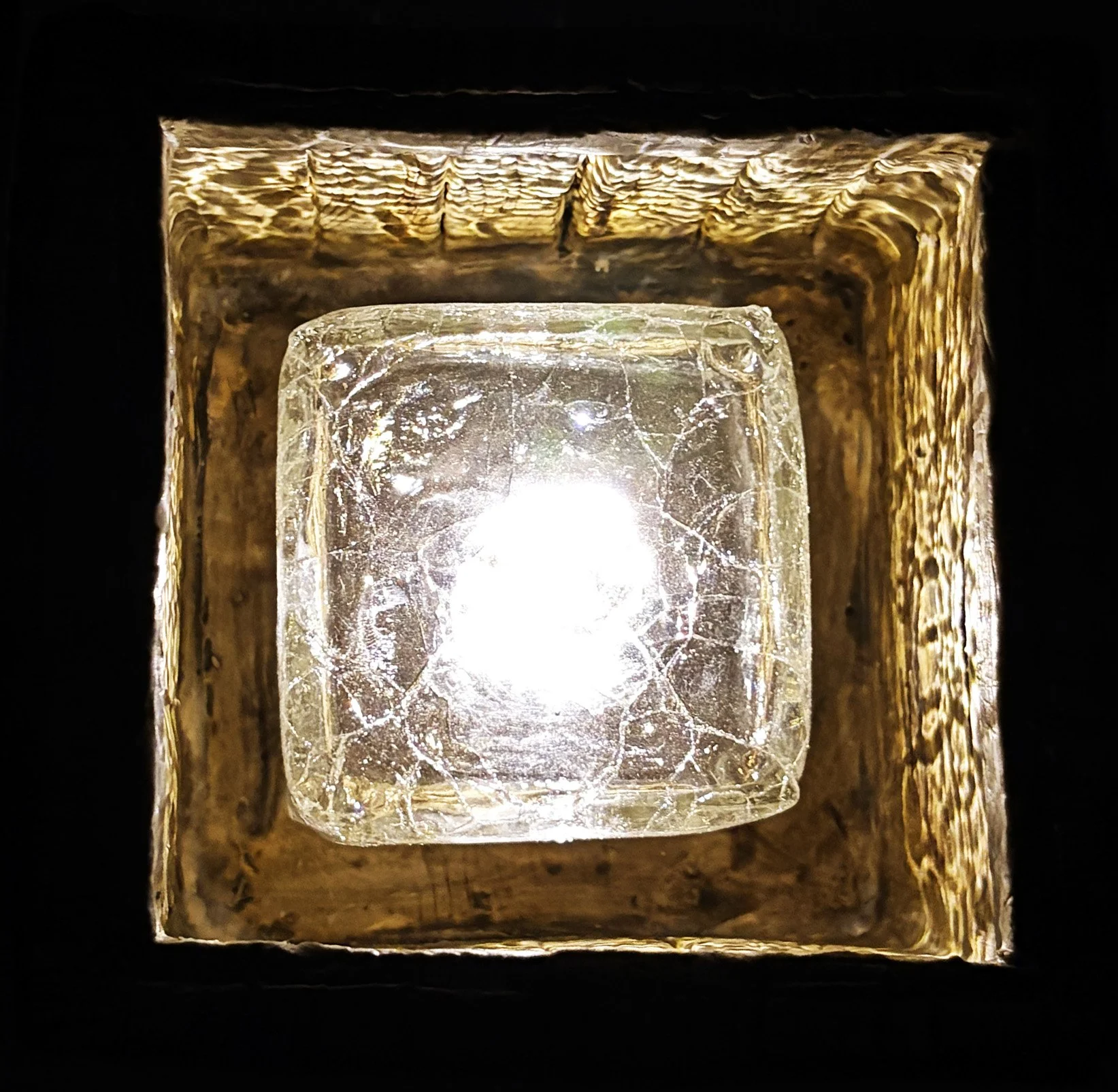
Light passes through the openings in the structure, revealing something the exterior initially conceals. The crate seems solid from a distance, but up close it is full of seams—small spaces where the interior becomes visible.
I was interested in the language of shipping and handling, particularly the phrase “as received.” It is a strangely neutral way of describing a condition. It makes no judgment about what happened before arrival. It simply records what is present at the moment something is handed over.
The crate became a way of thinking about that condition.
Objects designed for transport are expected to take damage. Their purpose is not necessarily to remain intact, but to continue protecting and carrying what has been placed inside them. Scratches, dents, repairs, and wear become evidence that the structure has done its job.
In As Received, I wanted that history to remain unresolved. There is no clear origin or destination and no indication of what the crate contains. We encounter it somewhere in between—used, altered, still functioning, and illuminated from within.